




Study (2020): Use of weighted blankets in an inpatient psychiatric clinic to reduce anxiety
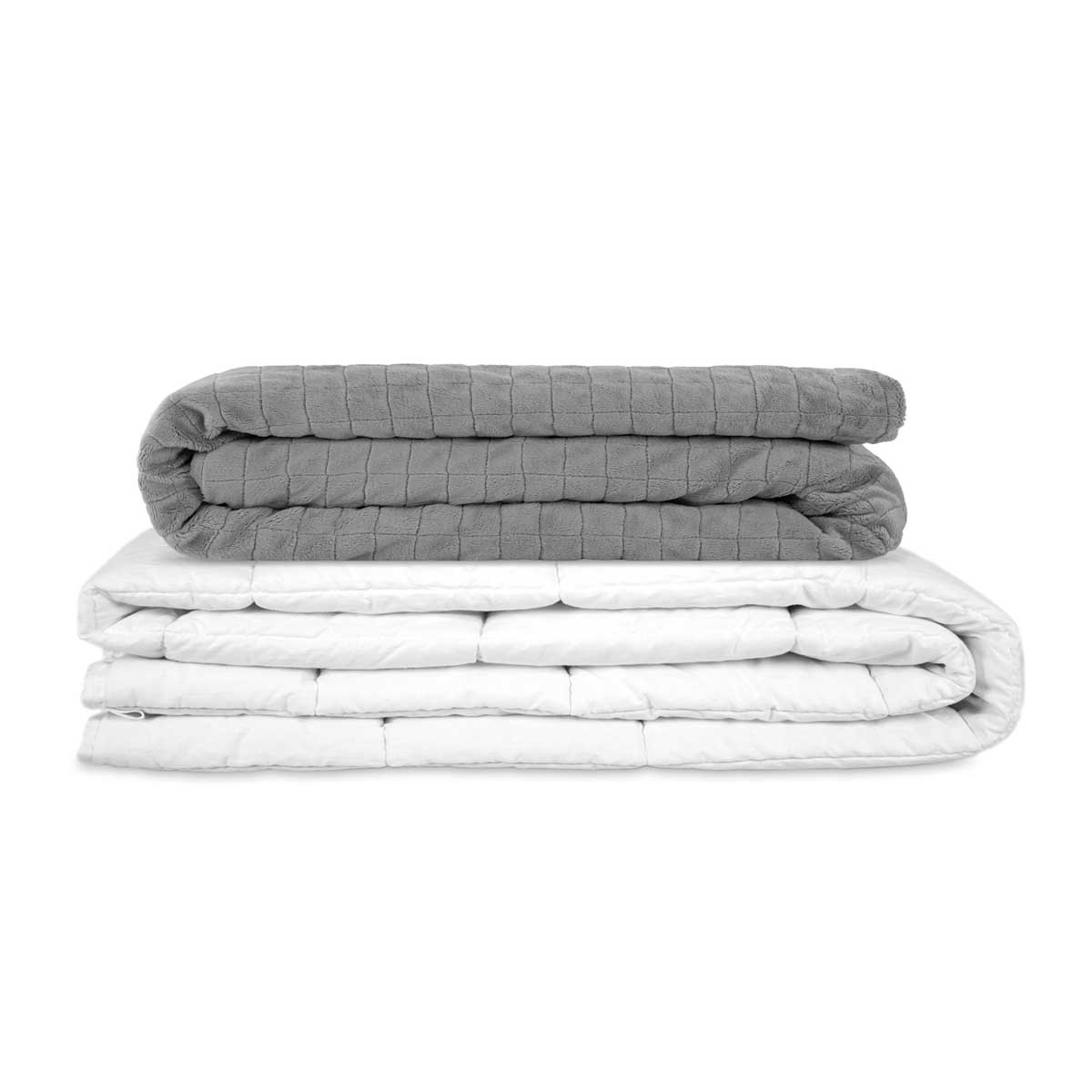
Patients who are involuntarily admitted to a psychiatric facility often suffer from anxiety or increased anxiety in response to being placed in an institutional environment. A proactive treatment option was introduced with the weighted blanket. The aim of this study was to examine the patients' anxiety symptoms before and after using a weighted blanket, compared to a group that did not use a weighted blanket for anxiety relief.
The study was conducted in an inpatient psychiatric facility from June 10, 2019, to November 7, 2019, with psychiatric patients who were not actively psychotic. Participants were offered a choice between weighted and unweighted Blankets for a 20-minute intervention. The treatment group consisted of individuals who chose a 6 kg weighted blanket, a 9 kg weighted blanket, or a 2 kg weighted lap pad. Participants in the control group were active in a broader range of situations. Pulse rate was measured with a pulse oximeter before using the Blankets. Anxiety was measured with the shortened form of the diagnostic test Spielberger State-Trait Anxiety Inventory (STAI: Y-6). Both measurements were repeated after the intervention.
The effects before and after using the weighted blanket were analyzed and compared with the control group that did not use a weighted blanket. Additional analyses were conducted within the weighted blanket group to determine whether gender or the weight of the blanket made a statistically significant difference.
There was a statistically significant difference (P < 0.05) between those who used a weighted blanket (n = 61) and those who did not (n = 61), based on pre/post data for both the anxiety test (STAI: Y-6) and patients' pulse rates. The repeated measures ANOVA showed a change between before and after the intervention only for the weighted blanket group and resulted in a significant reduction in both STAI: Y-6 (P < 0.001) and pulse rate (P = 0.040). Within the weighted blanket group, analysis showed that neither gender nor the weight of the blanket caused a significant difference for STAI: Y-6 or pulse measurement.
The use of weighted Blankets is a safe and potentially effective method to help individuals in a psychiatric facility cope with anxiety. This study found a statistically significant reduction in anxiety among adults in an inpatient setting, as evidenced by the STAI: Y-6 scores and the decrease in pulse rate in patients who used weighted Blankets. The study presents a possible alternative to medication, isolation, and physical restraint, which are neither patient-centered nor trauma-informed.
Source:
Becklund, A. L., Rapp-McCall, L., & Nudo, J. (2021). Using weighted blankets in an inpatient mental health hospital to decrease anxiety. Journal of integrative medicine, 19(2), 129–134. https://doi.org/10.1016/j.joim.2020.11.004



Leave a comment
This site is protected by hCaptcha and the hCaptcha Privacy Policy and Terms of Service apply.